The enduring allure of red gemstones
Throughout history, rubies have been prized for their captivating red colour, rarity and cultural significance. Associated with passion, protection, prosperity and authority, fine rubies have adorned royal jewellery and ceremonial objects across Asia, Europe and the Middle East.
Ruby is the red variety of corundum, a mineral composed of aluminium oxide. Its colour is produced chiefly by traces of chromium within the crystal. Sapphires belong to the same mineral family, but the name ruby is reserved for corundum displaying the appropriate red colour. With a hardness of nine on the Mohs scale, ruby is also well suited to enduring jewellery.
For much of the twentieth century, the international market associated important ruby supplies with historic Asian sources. The discovery and commercial development of major deposits in Mozambique changed that picture dramatically, making the country one of the leading sources of gem-quality ruby within a relatively short period.
Mozambique — a new chapter in ruby history
Mozambique occupies a long stretch of southeastern Africa’s Indian Ocean coast. Northern Mozambique, especially Cabo Delgado and Niassa provinces, contains ancient metamorphic rocks and mineral-rich formations. The country has a long history of regional and Indian Ocean commerce, but the large-scale international ruby trade associated with its present deposits is overwhelmingly a modern development.
Corundum occurrences were recorded in Mozambique before the twenty-first century, including during the Portuguese colonial period. It would be misleading to claim that the famous Montepuez ruby trade has an uninterrupted documented history reaching back to antiquity.
Discoveries in Niassa and Montepuez, 2008–2009
Ruby discoveries in the Niassa region attracted attention in 2008. The following year, major gem-quality finds were reported around Montepuez in Cabo Delgado province, inland from Pemba. Communities, small-scale miners and traders began to recognise the commercial potential of newly exposed ruby-bearing ground.
The discoveries quickly drew buyers experienced in coloured stones, including merchants connected to African and Asian trading networks. Gemological researchers visited the area, collecting reference samples and investigating the characteristics of Mozambican rubies — work that later became important in identifying the stones and determining origin in laboratories.
From local mining to organised production
In the earliest years, artisanal recovery and trading were central to bringing rubies to market. Stones moved through local centres into wider international networks, where they were evaluated, cut or treated by specialists in established coloured-gemstone hubs.
A major step towards industrial production came in June 2011, when Mwiriti Limitada and Gemfields established Montepuez Ruby Mining as a joint venture. Large-scale production began in 2012, transforming the region into a recognised commercial source of rough ruby.
The landmark auction of 2014
In June 2014, Gemfields held its inaugural auction of rough ruby and corundum from Montepuez in Singapore. The sale generated approximately US$33.5 million, demonstrating the scale of demand and marking a defining moment in Mozambique’s entry into the structured international gemstone market. It also drew attention to the need for consistent grading, documentation and transparent trading practices.
How rubies form in the Montepuez region
The Montepuez deposits are associated with ancient metamorphic rocks transformed by pressure and heat over immense periods. Ruby-bearing material occurs in or near amphibole-rich rocks, including altered amphibolite, within a structurally complex landscape.
Two important deposit types are found here. In primary deposits, ruby remains associated with the rock in which it formed. In secondary deposits, erosion has freed crystals from their host rock and natural processes have concentrated them in soil and ancient river gravels, sometimes called paleochannels.
Unlike deliberate heating after mining, geological formation occurs naturally over millions of years. The resulting crystals preserve evidence of their origins in inclusions, growth features and trace-element chemistry.
Maninginge Nice and Mugloto
Gemological studies have highlighted differences between material from Maninge Nice and Mugloto, two well-known areas associated with Montepuez. Some Maninge Nice rubies show lively purplish-red to red appearance and stronger fluorescence, while selected stones from secondary gravels around Mugloto may be cleaner or bulkier, with different iron contents and colour characteristics.
These are general observations, not fixed rules. Even within one deposit, rubies vary markedly in saturation, transparency, size and internal features. A locality name alone cannot establish the quality or value of a particular gemstone.
The beauty and individuality of Mozambique rubies
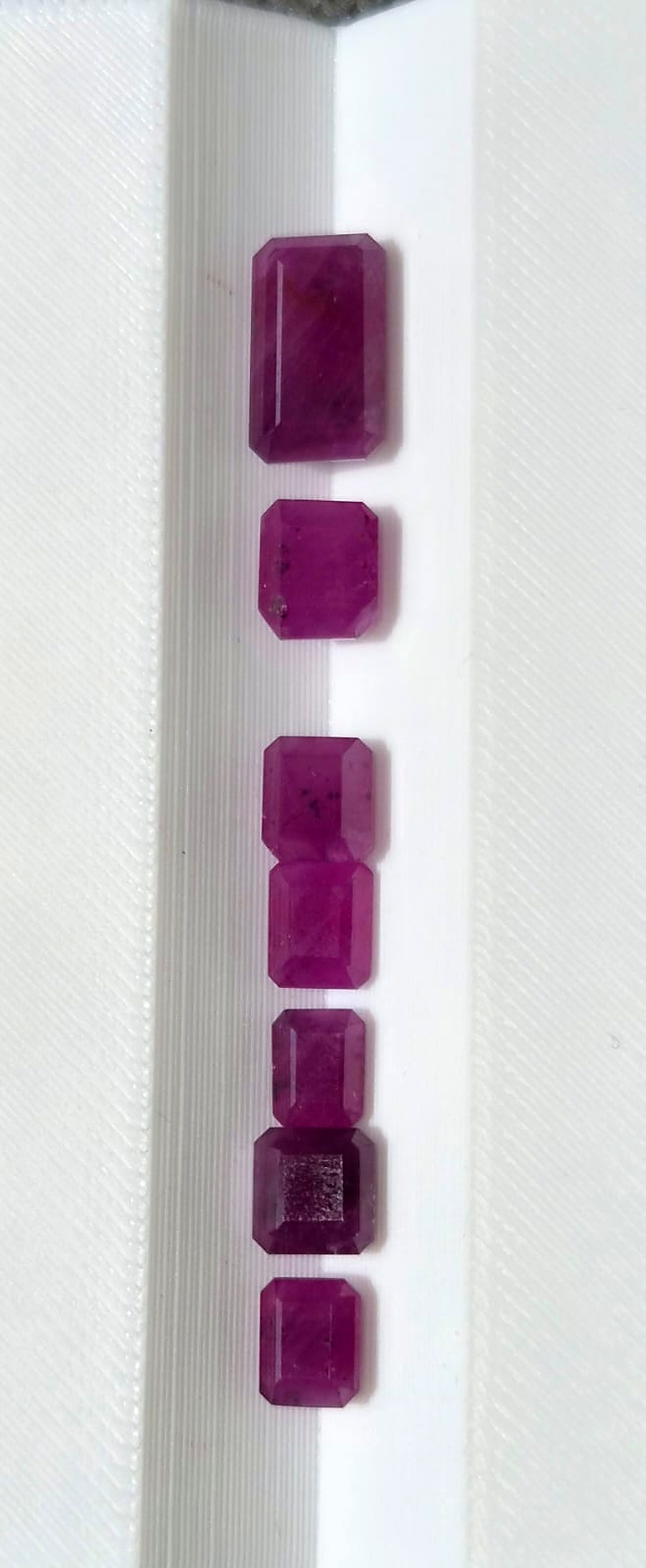
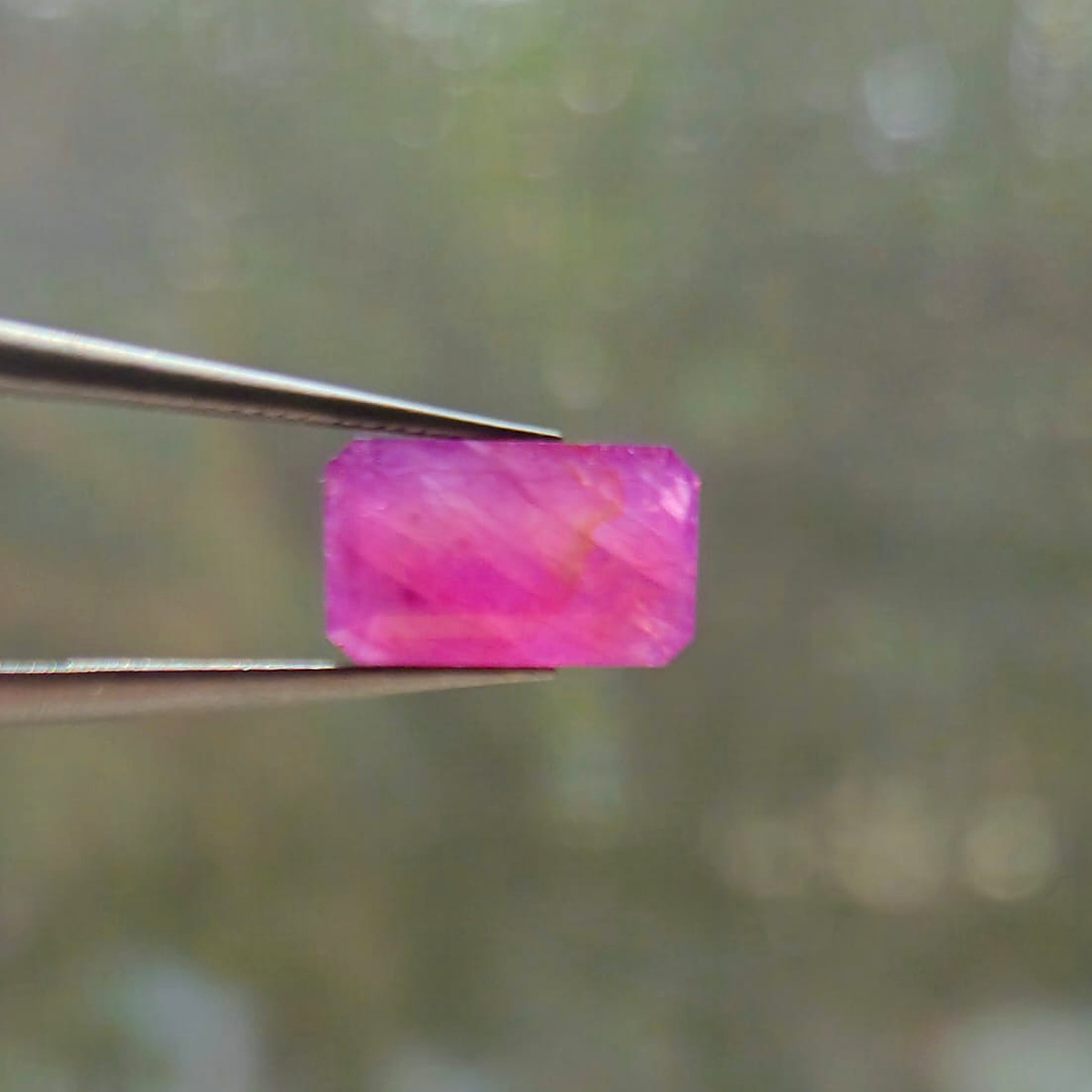
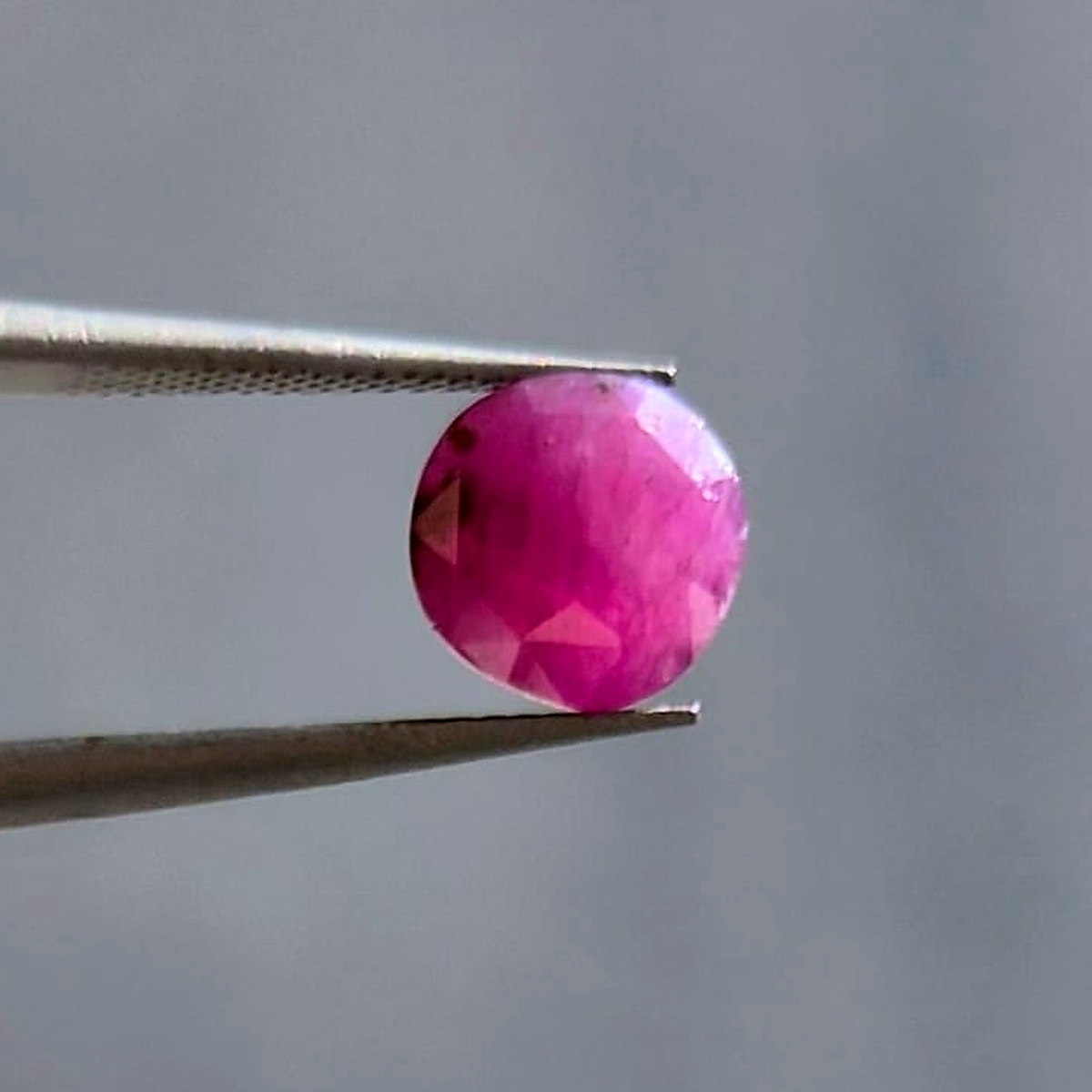
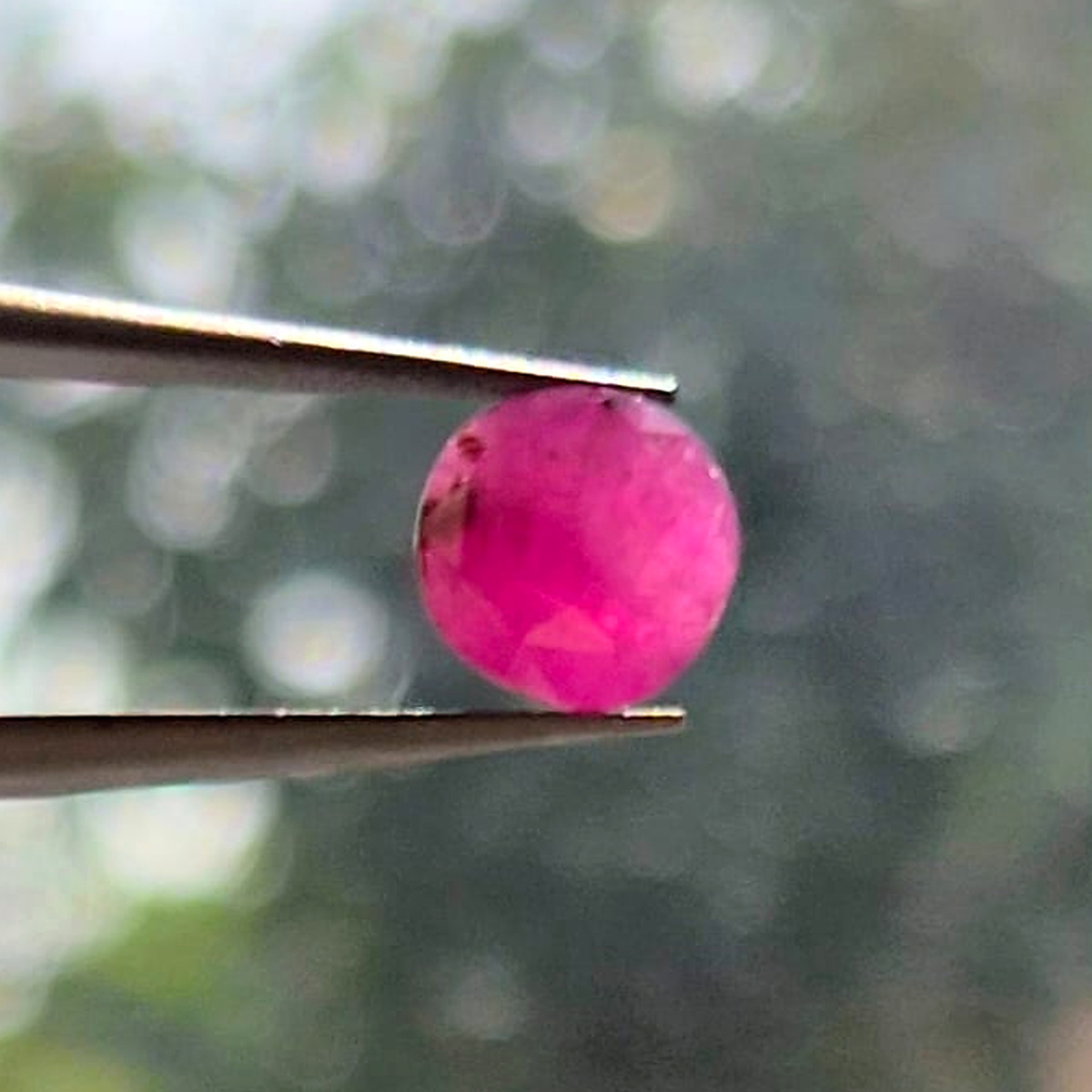
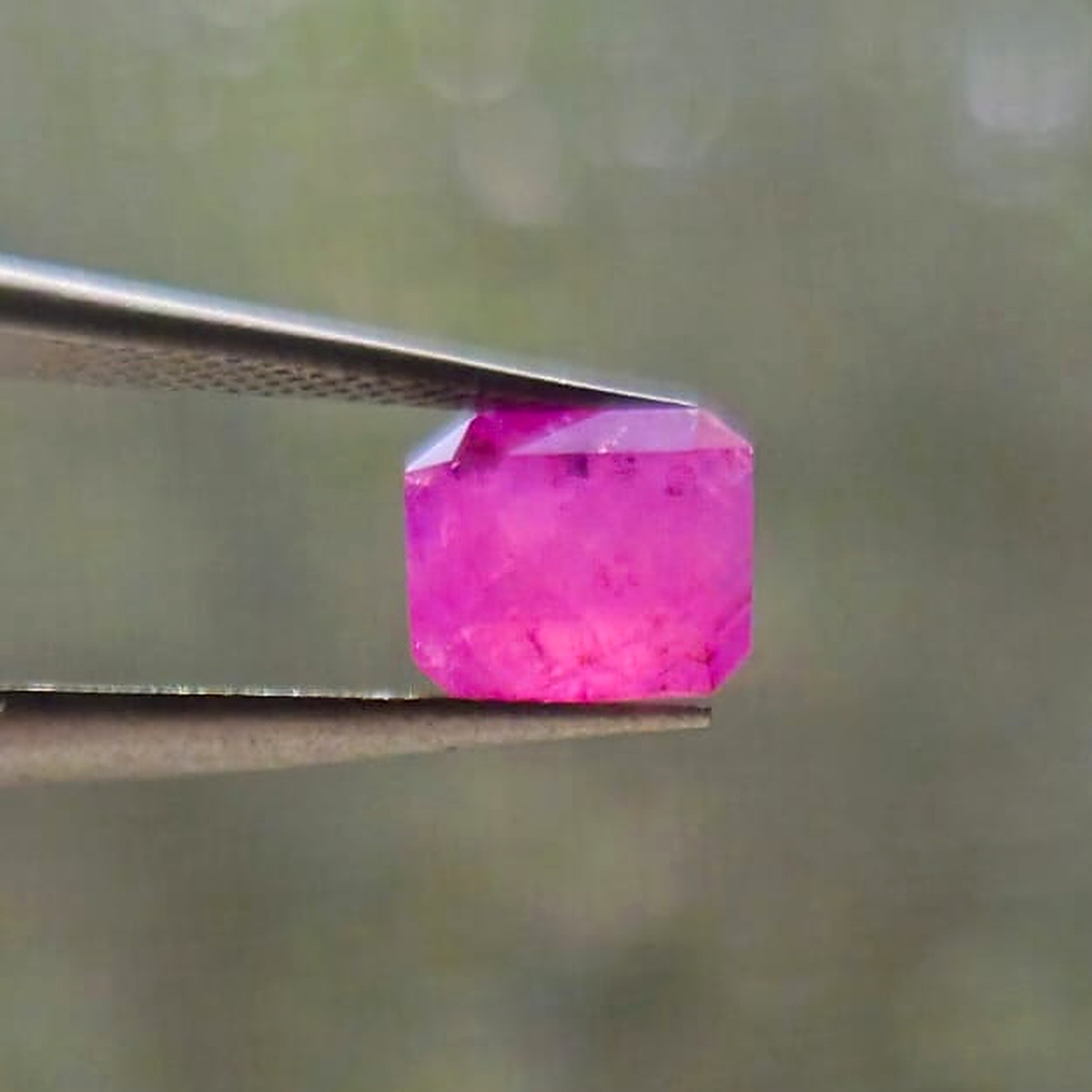
Mozambican rubies occur in a broad palette of red, from vibrant pinkish-red and purplish-red to deeper, sometimes more subdued hues. Chromium is central to the colour; iron can modify appearance and reduce fluorescence. This variation allows the region to produce rubies suited to different tastes and markets.
Some exceptional stones display attractive colour and clarity without treatment. Others contain fissures, fine particles, mineral inclusions or colour zoning that influence transparency and appearance. These natural features can also provide useful evidence during scientific examination.
Laboratories investigating Mozambique origin often study microscopic inclusions, mineral species and chemical signatures, including amphibole or mica-related inclusions and fields of tiny reflective platelets. A reputable origin determination relies on multiple lines of evidence and reference collections rather than colour alone.
The finest untreated stones can command strong prices, but not all Mozambican rubies are rare or high-value. Commercial worth depends on colour, clarity, cut, carat weight, treatment history, condition and supporting laboratory documentation.
From rough crystal to finished jewellery
The journey of a Mozambique ruby begins with recovery, sorting and grading. At commercial operations, ruby-bearing material may be excavated, washed and separated before specialists assess crystal quality, colour and cutting yield. Rough stones then enter trading networks where cutting and polishing add a further dimension to their finished appearance.
Thailand remains an important international centre for ruby cutting, treatment and commerce. Skilled cutters study each crystal to balance colour, brilliance and weight retention, choosing cuts that enhance natural beauty while preserving the qualities that make a stone desirable.
Understanding treatment disclosure
Heat treatment is widely used in the ruby trade and may improve some Mozambican stones by reducing an undesirable bluish or purplish component. Laboratories have documented low-temperature heating of Mozambique rubies; detecting it can require detailed microscopy and specialised testing.
Other material may undergo more extensive processes, including flux-assisted treatment or lead-glass filling of fractures. These should not be confused with ordinary heat-only treatment. Heavily glass-filled rubies have different durability and market characteristics and require explicit disclosure. For significant purchases, buyers should request a laboratory report and accurate written statements about treatment and any claimed country of origin.
Mining communities and responsible sourcing
The development of Montepuez has created commercial opportunities and drawn international attention to northern Mozambique’s mineral wealth. Its modern history has also included complex questions around land access, artisanal mining, safety, community relations and the distribution of economic benefits.
Allegations of serious abuses involving people near the mining concession were the subject of legal proceedings in the United Kingdom. In January 2019, Gemfields agreed to settle claims on a no-admission-of-liability basis. The company has described subsequent grievance and community programmes, while independent observers continue to emphasise accountability and due diligence.
For gemstone buyers and sellers, responsible sourcing involves more than a statement of geographic origin. Traceable records, reliable supplier information, independent documentation and clear treatment disclosures all help build confidence in the journey from mine to market.
Key dates at a glance
| Period | Milestone |
|---|---|
| Before 2000 | Corundum occurrences were known; the major gem-quality ruby industry had not yet emerged. |
| 2008 | Ruby discoveries in the Niassa region attract gemological and trade attention. |
| 2009 | Significant gem-quality finds around Montepuez reshape exploration and trading. |
| 2011 | Mwiriti and Gemfields form Montepuez Ruby Mining as a joint venture. |
| 2012 | Large-scale Montepuez operations begin producing rubies. |
| June 2014 | The first Gemfields auction of Montepuez rough ruby in Singapore reports about US$33.5 million. |
| 2015–2019 | GIA and other laboratories publish major studies of geology, inclusions, origin and treatments. |
| 2019 | Human-rights-related claims involving the mining area are settled without admission of liability. |
| 2020s | Mozambique remains a major source, from fine untreated gems to treated commercial grades. |
A modern gemstone heritage with global significance
The story of Mozambique rubies reveals how a geological discovery can transform an international market. From the first widely reported finds in northern Mozambique to the rapid emergence of Montepuez as a prominent commercial source, the country has become central to contemporary ruby history.
Its rubies link the ancient natural processes that created corundum to the knowledge of miners, gemologists, cutters and jewellers working today. Each crystal carries its own combination of colour, structure and geological clues, while the region’s modern experience illustrates the responsibilities that accompany trade in precious natural resources.